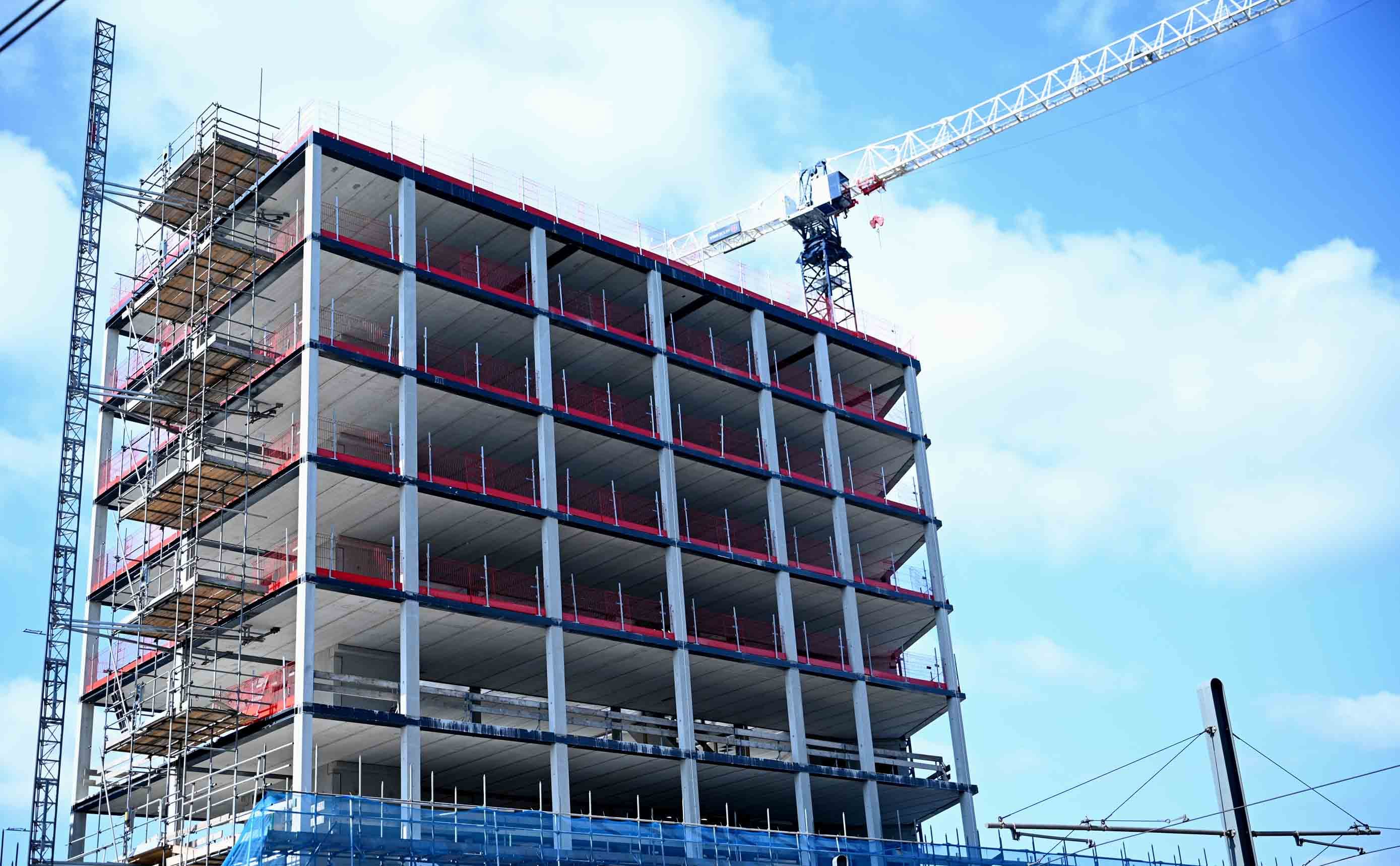
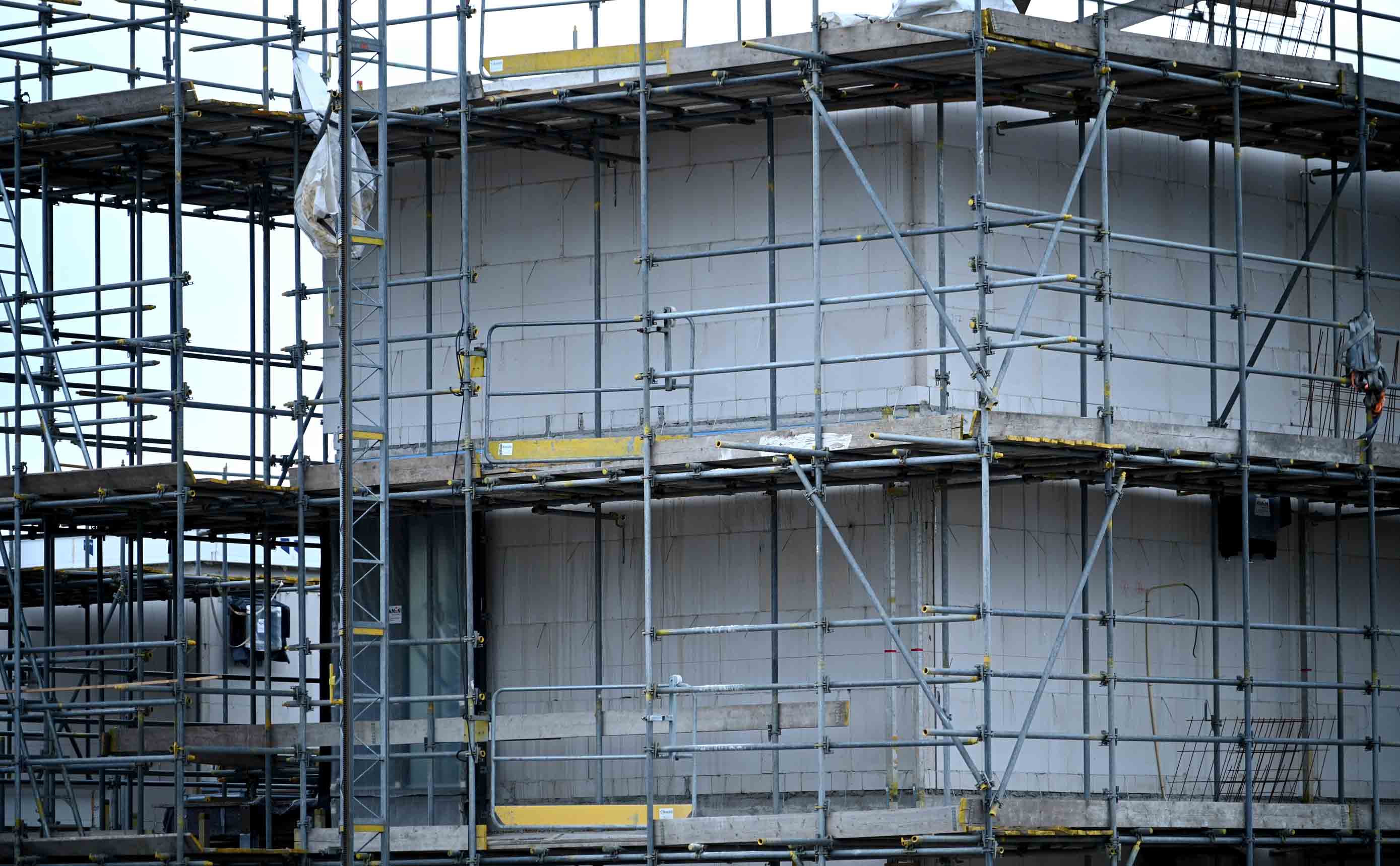
Two weeks after the inspection, you go looking for the snag. "Crack near the second-floor stairwell," the note says. You stand in the stairwell and there are three walls it could be. The kwaliteitsborger has moved on to the next job, the photo could be any grey wall on any floor, and the fix is now a guess. Nobody did anything wrong. The finding just had nowhere solid to live.
That is the quiet gap in most quality tools on a building site. They stop at a photo and a comment. For a coffee-break punch list that is enough. For a Wkb dossier it is not, because at the end of the job you have to prove the work, and a photo of a wall proves almost nothing about which wall.
A photo is a memory, not a location
A snag pinned to a 2D drawing is better than a photo on someone's phone, but only a little. A drawing is one sheet, one discipline, one moment. It does not know the crack is on a specific concrete wall the constructeur drew, that carries a fire rating, that sits on the second floor between two others that look identical. Two weeks later the sheet cannot tell you which of the three it was. So the same spot gets re-inspected from memory, and the record of it stays vague.
Under the Wet kwaliteitsborging voor het bouwen, in force since 1 January 2024 for gevolgklasse 1, vague is a problem you pay for later. An independent kwaliteitsborger judges the plan, the build and the oplevering. At gereedmelding they put their name to a verklaring, and you hand that, with the dossier, to the bevoegd gezag. The bevoegd gezag then has two weeks to come back on anything missing, and you do not take the building into use during that window. A finding you cannot trace is a hole in the evidence, on exactly the day you cannot afford one.
What a finding actually has to carry
A finding worth keeping is a small record with everything attached. Where it is. How bad it is. Who is fixing it. When it is due. The photo that proves it was closed. And a history of who changed what, so at handover you can show the bevoegd gezag that each point was actually resolved, not just marked done. That is the difference between a punch list and an audit trail.
The model is the one thing that holds still
Here is the part that closes the gap. A wall on a drawing is a line. The same wall in an IFC model is an object with a stable identity that does not change when someone re-exports the file. Pin the crack to that element and the location comes with it, for good. Open the model in a browser, isolate the second floor, cut a section, and click straight through to the finding. Anyone can walk back to the exact spot, on screen or on site, without a guess and without the borger standing next to them.
The viewer is not a heavy desktop tool either. It runs in the browser, on the laptop in the site cabin or the phone in your pocket, with architecture, structure and services loaded together in one scene. The people who need the model most, the site team and the kwaliteitsborger, stop working from emailed screenshots and start working from the live geometry.
From finding to dossier, without retyping it twice
The reason this matters beyond a tidy list is that the same finding feeds two jobs at once. It is the field record the site team works off, and it is the evidence line in your dossier. Anchor it once and it does both. The dossier readiness checklist fills in as the work closes, the compliance report comes off the model rather than out of a folder, and filing day stops being a scramble to reassemble photos nobody labelled.
Why the Wkb makes this pay off
The regime is built on demonstrable quality. Since 2024 you have to prove your work at gereedmelding, and proof is far easier when every finding already sits on the element it concerns instead of in a folder of loose photos.
A finding is never a vague description again. It is a precise point anyone can return to, on screen or on site.
openBIM is why this travels
None of this leans on one vendor's file format. IFC is an open, vendor-neutral standard looked after by buildingSMART, and it is already how the industry works across Europe, not only here. That matters because building quality is going the same way in more places than the Netherlands. The Wkb is the Dutch shape of a wider European move to make building quality something you can show, not just claim. A finding anchored to a neutral model element is portable by design, so the same approach carries to the Benelux and beyond as those rules digitalise.
Where we come in, and where we stop
That last stretch is what BimDossier does. Findings, photos, certificates and the dossier, all sitting on the model, from bouwmelding to gereedmelding. Honest about the edges: the compliance checks run against the Dutch Bbl and Wkb today, NL-first and built to add countries without starting over. It is not an approved Wkb instrument and does not replace your kwaliteitsborger. What it does is make sure that when they, or the bevoegd gezag, ask where a finding was, the answer is a place on the model, every time.