There is a European directive most people on site have never read, and it just became the reason your next new building has to run without a gas connection. It is called the EPBD, and since 29 May it is not a Brussels document any more. It is Dutch law, sitting in the Bbl next to the rules you already file against.
The EPBD is the Energy Performance of Buildings Directive. The European Union rewrote it in 2024, and gave every member state until 29 May 2026 to turn it into national law. The Netherlands made that deadline. The first set of rules is already in force.
From a European directive to a line in the Bbl
A directive is not a law you can build against. It is an instruction to the member states: put this into your own rulebook by this date. That is what transposition means, and it is why the same European rule ends up looking a little different in each country.
In the Netherlands the rulebook is the Bbl, the Besluit bouwwerken leefomgeving. The first tranche of the EPBD was folded into it, along with two related decrees, by an amendment published as Staatsblad 2026, 103. It took effect on 29 May 2026, the day the directive required. So the rules you will file against are Dutch, in Dutch, in the Bbl. The reason they exist is European.
What "zero-emission" actually asks of a new building
The centre of the directive is a single idea. A new building should be a zero-emission building. That means a very high energy performance and no carbon emissions on site from fossil fuels. In plain terms, no gas boiler, a well-insulated shell, and the energy it still needs coming from renewable sources.
The dates are staged. From 1 January 2028, every new building owned by a public body has to be zero-emission. From 1 January 2030, every other new building does too. That is not far off for anything on a drawing board now. A building that breaks ground in 2029 is a 2030 building by the time it opens.
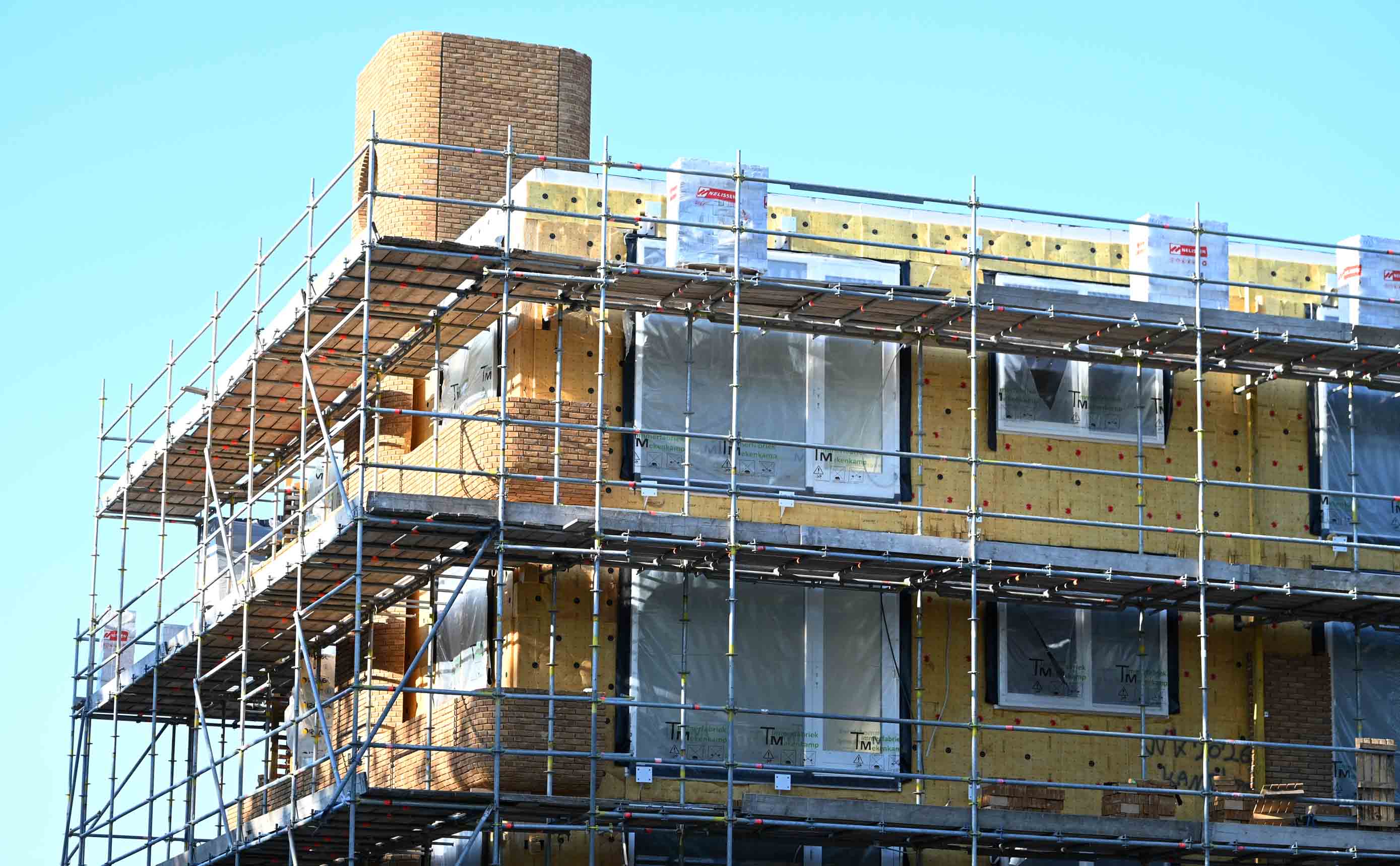
None of this is a slogan. It is the insulation thickness on that wall, the U-value of that window, the make of the heat pump in the plant room. Energy performance is a property of the building, carried by the elements it is made of. Which is exactly where a model can hold it.
The first tranche, and what is already in force
Not everything landed at once. The Dutch implementation runs in tranches through 2030. The first one, live since 29 May, brings in a revised energy label, requirements for charging points at new construction and larger renovations, an obligation to generate solar energy on certain buildings, and the national building renovation plan the directive asks every member state to draw up. More follows, including the reworked A to G label scale, which takes effect on 1 January 2030.
The same rulebook, from Rotterdam to Brussels
Here is the part worth holding onto. This is not a Dutch rule. The EPBD binds all twenty-seven member states. Belgium and Luxembourg are transposing the same directive into their own building codes, on the same clock. A contractor in Antwerp and a contractor in Rotterdam are now building toward the same European target, each through their own national decree.
That is the shape of building regulation for the next decade. The energy and carbon questions arrive at the European level and land, country by country, in a national rulebook. The Netherlands did it early. It will not be the last.
What this does not touch
BimDossier does not calculate an energy label or an energy-performance score. That is a separate discipline, with its own certified tools and data. What our compliance engine checks against your IFC model today is the Bbl rule packs we support: fire safety, structural requirements, usability and thermal insulation. The EPBD sits above that, and the result of an energy assessment is one more document the dossier has to hold.
Where we come in
A zero-emission building is proven the same way any building is proven under the Wkb: with evidence, on the model. The insulation values, the certificates for the heat pump and the panels, the energy assessment once it is done, all of it has to be present and correct at gereedmelding. BimDossier keeps that from being a shoebox of loose PDFs. The findings sit on the element, the certificates track their own expiry, and the dossier checklist knows what is still missing, from bouwmelding to gereedmelding. The rule came from Europe. The proof still sits on your model.